
"Negligent Protest Organizing"
The Fifth Circuit has recognized a cause of action that violates the First Amendment and significantly imperils the right to protest.

It’s gratifying when judges cite your work. Twice now judges on the U.S. Court of Appeals for the Fifth Circuit have cited an article I published about the potential civil liability of individuals who organize, participate in, or suppose public protests. It is of course more gratifying when your position is supported by a majority of the judges on the panel. Unfortunately, in both instances the judges who cited my work were dissenting from decisions in which a majority recognized a novel theory of protest liability - “negligent protest organizing.” The case, Ford v. Mckesson, has been ricocheting around federal and state courts since 2017. On its journey, the case even made a stop at the Supreme Court (which did not decide the merits and instead remanded the case to lower courts so they could decide issues of state law). Now that the appeals court hasallowed the action to go to trial, I want to discuss the “negligent protest organizing” cause of action and explain why it is fundamentally at odds with the First Amendment.
Civil Liability and Public Protest
Before addressing the details, it is important to place the “negligent protest organizing” theory of liability in proper context. Those who organize and participate in public protests are subject to a broad range of criminal and civil sanctions. On the criminal side, they can be arrested for breach of peace, public disorder, failure to disperse, conspiracy to riot, and a host of other criminal offenses. This array of criminal laws, not to mention the aggressive law enforcement tactics used to enforce them and to police protests, pose significant threats to protesters’ ability to exercise First Amendment rights.
Civil liability can also substantially affect protesters’ First Amendment rights. Protesters may be subject to fees, fines, bonds, civil damages, and other monetary penalties. Public protest organizers and participants may incur civil liability under a variety of common law tort (personal injury) actions including public and private nuisance, trespass, negligence, defamation, and interference with business relations. Protesters who block speakers from going to scheduled events may be liable for false imprisonment, obstructing free passage, battery, assault, and interference with advantageous relations.
As part of a backlash against mass demonstrations, including those relating to President Trump’s first inauguration, Standing Rock, events in Ferguson, Missouri, and the murder of George Floyd, state legislatures proposed or enacted a host of new causes of action and enhanced civil penalties for protest and civil disobedience. For example, they authorized actions for “riot boosting,” which consists of training, supporting, or advocating on behalf of a public protest that later results in violence. Many states also increased the civil penalties for blocking roads or engaging in other acts of civil disobedience.
Damage awards resulting from civil causes of action, which also involve lawyers’ fees and court costs (not to mention personal time and effort), represent a particularly concerning threat to public protest. Under federal and state laws, protesters may be liable for enhanced civil penalties— including punitive damages. Protest activities can also lead to other costs, including loss of educational and employment opportunities. In many instances, the costs of dissent are borne by groups and individuals unable to absorb them. Separately, and in combination, they may chill or suppress the exercise of First Amendment rights to speak, assemble, and petition government officials.
Ford v. Mckesson and “Negligent Protest Organizing”
The cause of action I want to focus on is a type of “negligence” or personal injury action. In general, negligence involves the breach of a duty of care that foreseeably causes injury to the plaintiff.
Mckesson involves a lawsuit filed by a police officer who was injured when an unknown assailant threw a rock or other object at him during a Black Lives Matter protest. Ford, the officer, sued DeRay Mckesson, who was involved in organizing the protest, for his injures. Ford’s claim is that Mckesson’s negligence in planning, organizing and leading the protest renders him liable for the foreseeable act of the third party who assaulted Ford. Under Ford’s theory, the jury could find that Mckesson had a duty to exercise reasonable care in organizing the Black Lives Matter protest at which the officer was injured. By advocating that protesters occupy a roadway, the theory asserts, it was foreseeable that there would be a violent confrontation with police.
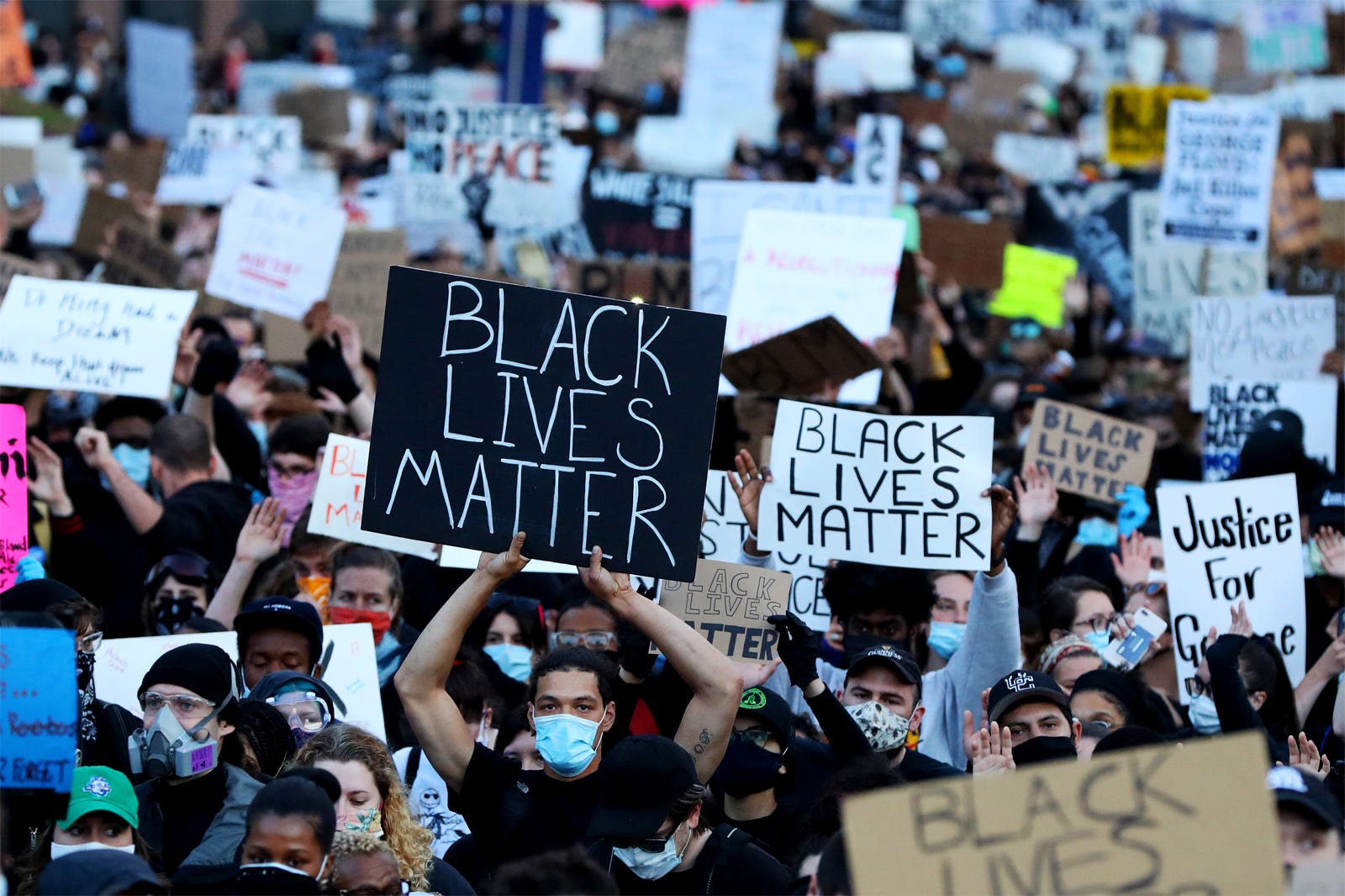
Throughout the litigation, Mckesson has argued that this theory of liability violates the First Amendment. In Ford v. Mckesson, the district court dismissed the negligence claim for several reasons, including that it violated the First Amendment to impose liability on a protest organizer based on the criminal acts of a third party.
The Fifth Circuit reversed.
As background, the majority noted that Mckesson had been involved in prior protests, some of which had turned violent. It also observed that Mckesson “admitted to knowing that protestors blocking public highways could lead to violent clashes with police.” The majority also thought it noteworthy that Mckesson “refused to condemn political violence in an interview on national television.”
The court described the scene on the date of the protest:
Officer Ford witnessed Mckesson “leading the crowd” and “talking to a lot of people.” Later, he was seen “getting [protestors] ready to walk into the highway.” Officer Ford and “other police officers” then witnessed Mckesson “giving orders” to protestors “to go out into that road and block traffic.” Mckesson was then “in the front” of the crowd that followed him “out into the highway.”
While obstructing the road, the protestors continued to throw water bottles at police. As their water bottle supply dwindled, one rioter threw either a piece of concrete or a rock that hit Officer Ford in the face. The resulting blow knocked Officer Ford to the ground and caused devastating harm, including the loss of teeth, a jaw injury, a concussion, and posttraumatic stress disorder. The injuries Officer Ford suffered to his teeth were so extensive that he was forced to spend 18 hours undergoing procedures in a dental chair. Officer Ford suffers ongoing problems as result of his injury. Years later, his vision is still clouded with “black marks” and
The majority concluded that Ford had raised genuine issues of material fact regarding the element of his negligence claim - that Mckesson owed him a duty of care, that he breached that duty, and that the injury was foreseeable. The court also held that the district court erred in concluding the "negligent protest organizing” claim violated the First Amendment.
Note that under the “negligent protest organizing” theory, protest organizers can be held liable for damages stemming from violent acts even if they did not personally engage in, direct, authorize, or ratify them so long as they were a foreseeable consequence of the organizer’s actions. To understand and appreciate the implications of this cause of action, one need look no further than the public protests that rocked Minneapolis, Chicago, and many other cities following the death of George Floyd and those that have occurred more recently in connection with the activities of federal ICE agents. Under a “negligent protest organizing” theory, anyone who organizers a public demonstration may be held liable for all foreseeable damages that occurred during mass demonstrations—including those caused by the unlawful acts of counter-protesters and agitators not associated with the group or movement. So long as it is “foreseeable” that violence or other unlawful action will occur, the organizer is on the hook.
Judge Carolyn Dineen King dissented. She began her dissent this way:
Officer John Ford was tragically injured in his line of duty. Someone should be held accountable. But Officer Ford has not come close to demonstrating that Mckesson is that someone. Perhaps eager to afford Officer Ford a remedy for his injuries, the majority nevertheless holds that he has done just that. In so doing, it imperils First Amendment liberties. So I dissent.
Judge King concluded: “I find it difficult to conclude that Officer Ford has raised fact issues on every element of his claim. And I find it even more difficult to conclude that the First Amendment lies dormant while its protections are chilled to the marrow.”
She was not convinced that Mckesson had “organized” the protest at which Ford was injured: She wrote:
[F]ar from creating fact issues on whether Mckesson was an organizer of the Baton Rouge protest, the evidence shows that Black Lives Matter protest-planning is decentralized and community-led; Baton Rouge’s community leaders invited Mckesson to join their planned protest; and Mckesson retweeted the details of an already-planned protest. That is insufficient for a reasonable jury to conclude that he organized the protest at issue.
Judge King also observed that “Officer Ford has produced zero evidence that the unidentified rock-thrower was a protester at all.” That lack of evidence, she asserted, precludes a jury from holding Mckesson liable for causing the injury by negligently organizing and leading the protest.
These contentions about the record evidence are relevant to the issue of whether Mckesson can be held liable for negligence. Judge King also concluded that the “negligent protest organizing” claim should not reach a jury. She wrote:
[T]he majority’s holding today greenlights a form of “heckler’s veto.” We have said that “it is not acceptable for the state to prevent a speaker from exercising his constitutional rights because of the reaction to him by others.” Beckerman v. City of Tupelo, 664 F.2d 502, 509 (5th Cir. Unit A Dec. 1981). But by not insisting that Officer Ford show proof that the rock-thrower is a protester, rather than a bystander or even a counter-protester, the majority makes every protest a hostage to “the reaction . . . by others.” Id. Indeed, under today’s decision, the violence “even of those opposed to the protest” may lead to civil liability for a protest leader “on the theory that such violence was ‘foreseeable.’” Timothy Zick, The Cost of Dissent: Protest and Civil Liabilities, 89 Geo. Wash. L. Rev. 233, 273 (2021) (emphasis in original). Even worse, someone opposed to a planned protest can simply threaten violence. In that case, the protest leader cannot deny foreseeability and must now choose between exercising his First Amendment rights or facing potentially ruinous liability.
. . . Moreover, by hinging Mckesson’s liability on the “foreseeab[ility] that the Baton Rouge police would be required to respond to the demonstration,” the majority “allows law enforcement to dictate the extent of protesters’ liability exposure,” Zick, supra, at 273.
“Negligent Protest Organizing” Liability Violates the First Amendment
I want to elaborate on Judge King’s First Amendment analysis, which I obviously agree with. "As a theory of liability, “negligent protest organizing” poses a severe threat to public protest activity, which the Supreme Court has long recognized is protected under the First Amendment.
General First Amendment Restrictions on Civil Liability
The First Amendment does not limit the imposition of civil damages, penalties, or other costs associated with a protest organizer’s or participant’s own violent or unlawful conduct. As the Court stated in NAACP v. Claiborne Hardware (1982), “[t]he First Amendment does not protect violence.” Thus, a protester who physically assaults someone or throws a rock or other object at a law enforcement officer or counter-protester can be held liable for damages from such unlawful acts.
Similarly, the First Amendment does not protect individuals who intentionally conspire to engage in unlawful acts, including but not limited to violent conduct. Thus, where there is clear proof of an intent to further the unlawful aims of a group, conspiracy and other civil claims do not violate the First Amendment. However, courts and juries cannot infer the requisite intent from membership in the group or other protected First Amendment activities. Rather, government must prove intent to engage in violent or unlawful activities.
Where peaceful forms of protest, dissent, and expression form even part of the basis for civil liability, courts are duty-bound to consider whether those actions comport with the First Amendment. As the Court stated in Claiborne Hardware, the First Amendment “imposes a special obligation” on courts to “examine critically the basis on which liability was imposed.” In such circumstances, the Court has emphasized, “[p]recision of regulation” is required.
Together, the highlighted phrases—“special obligation,” “examine critically,” and “precision of regulation,”—establish that the First Amendment significantly limits protesters’ potential civil liability exposure. Indeed, these principles or guidelines are particularly important where political expression and speech on matters of public concern are involved.
Applying these general guidelines, the Supreme Court has altered some common law tort standards and required that they be precise, prohibited certain civil actions altogether, and interpreted protest-related civil statutes narrowly. For example, in N.Y. Times Co. v. Sullivan (1964, it held that allegedly defamatory statements pertaining to public officials’ exercise of their official duties are actionable only if the plaintiff meets a demanding “actual malice” standard. The Court has also held that protesters cannot be held liable for the tort of intentional infliction of emotional distress when their speech relates to a “matter of public concern.”
One of the central issues in Claiborne Hardware was the extent to which organizers and supporters of a civil rights boycott could be held liable for the violent and unlawful acts of those who participated in the boycott. Black activists demanded that local officials and businesses change a variety of practices that harmed their community. When these changes did not materialize, the protesters participated in an economic boycott of white businesses. Reviewing a substantial civil verdict against the boycott organizers, the Court observed that the boycott “included elements of criminality and elements of majesty.” During the seven-year period under review, a few protesters committed violent acts. The trial court concluded that the boycott was itself unlawful as a restraint of trade and held all organizers and participants jointly and severally liable for the damages suffered by white merchants. The Mississippi Supreme Court upheld the finding of liability, although on the different ground that boycott organizers had “agreed to use force, violence and ‘threats’ to effectuate the boycott.”
The Supreme Court emphasized that banding together for the lawful purpose of protesting segregation and other race-based harms enhanced effective advocacy, and it effectively combined speech and assembly rights into a formidable means of change. It concluded that boycott organizers and participants were engaged in protected association and “speech in its most direct form.” Accordingly, the Court emphasized that the earlier-mentioned First Amendment limits on civil liability.
The Court acknowledged that a state law could impose damages on any protester who engaged in violent conduct. Thus, states could impose civil liability for damages “directly and proximately caused by wrongful conduct chargeable to the defendants.” According to the Court, this “careful limitation on damages” was necessary owing to the important First Amendment interests involved. Thus, it emphasized that “[o]nly those losses proximately caused by unlawful conduct may be recovered.” As examples of such unlawful conduct, the Court mentioned “use of weapons, gunpowder, and gasoline.” In sum, the Court concluded, “a judgment tailored to the consequences of [protesters’] unlawful conduct may be sustained.”
In sum, the Court concluded that states retain undiminished authority to impose damages on protest organizers and participants who themselves perpetrate violence; however, states may hold a protest leader personally responsible for wrongs committed by others only when the leader himself “authorized, directed, or ratified” the violent acts. In recognition of the First Amendment right of association, “[c]ivil liability may not be imposed,” the Court wrote, “merely because an individual belonged to a group, some members of which committed acts of violence.” The Court concluded, “For liability to be imposed by reason of association alone, it is necessary to establish that the group itself possessed unlawful goals and that the individual held a specific intent to further those illegal aims.” As the Court observed, “[t]he right to associate does not lose all constitutional protection merely because some members of the group may have participated in conduct or advocated doctrine that itself is not protected.”
Ultimately, the Court held that the damage award against the NAACP and its members lacked the “precision” required to satisfy the First Amendment. The civil judgment “compensate[d] respondents for the direct consequences of nonviolent, constitutionally protected activity.”
The Negligence Claim in Ford v. Mckesson
The civil action for “negligent protest organizing” cannot be squared with these First Amendment restrictions. The Fifth Circuit has allowed a civil negligence claim to proceed against a Black Lives Matter protester on the ground that he failed to exercise reasonable care in organizing and leading a demonstration at which someone injured a police officer. Ford, the officer, does not allege that Mckesson threw the object that caused his injuries. He alleges that by encouraging protesters to obstruct a roadway, he is liable because it was foreseeable that a violent confrontation would occur.
There are several fundamental problems with this cause of action. [The following draws from my Costs of Dissent article.]
First, the Fifth Circuit has ignored Claiborne Hardware’s guidelines relating to the preservation of protesters’ First Amendment rights. Claiborne Hardware held that organizers and participants can be liable only for their own acts of violence or the acts of others they specifically direct or authorize. Thus, had Mckesson thrown the heavy object at the officer or directed someone to do so, the First Amendment would not offer a defense. However, not only did he have no part in the violence that occurred, Ford did not allege Mckesson uttered a single word of encouragement to participants who might have been inclined toward violence. Imposing liability on a protest organizer when the organizer does not authorize, encourage, or ratify any acts of violence, ignores the precision of regulation and narrow confines of protester liability the Court insisted on in Claiborne Hardware. The Fifth Circuit failed to satisfy its “special obligation” to carefully consider the First Amendment implications of the “negligent protest” theory.
Second, Mckesson is inconsistent with First Amendment precedents relating to a speaker’s liability for the violent conduct of others. Holding a protest organizer liable for damages he did not expressly advocate and did not specifically intend to occur imminently violates the speech-protective standard set out in Brandenburg v. Ohio (1969), which imposes strict limits on liability for “inciting” imminent lawless activity.
Third, the Fifth Circuit’s decision is inconsistent with the broad protections afforded freedom of assembly and association. Claiborne Hardware specifically observed that “[t]he First Amendment . . . restricts the ability of the State to impose liability on an individual solely because of his association with another.” The panel majority insisted that Mckesson had done more than associate with BLM. However, the court’s approach allows juries and courts to impose broad liability on protest organizers and leaders, simply by virtue of their being prominent figures at a protest event that may draw hundreds or thousands of participants, counter-protesters, and participants. Under the standard the court adopts, Mckesson and similarly situated protest organizers would face liability for merely belonging to groups, “some members of which committed acts of violence.”
Fourth, as a liability standard, “negligent protest organizing” lacks the care and precision demanded under Claiborne Hardware. The Fifth Circuit reasoned that Mckesson could be liable for the violence done by the object-thrower based on his direction of tortious activity—i.e., his negligent planning of the protest. As the Court has noted in other civil liability contexts, including defamation, the negligence standard is far too broad and imprecise to protect speech on matters of public concern. Lower courts have also rejected the negligence standard as inadequately protective of free speech and association rights. As one state appeals court observed, in a case involving targeted picketing of an abortion provider’s residence, “[t]he specter of protesters being subjected to unlimited liability for claims of negligent infliction of emotional distress from a contingent of unknown plaintiffs would doubtless have a stifling effect on [expression].”Indeed, as discussed earlier, the Supreme Court refused to allow injured plaintiffs to sue public protesters for intentional infliction of emotional distress in part because the “outrageousness” standard for that tort is too imprecise to serve as the basis for liability where free speech is concerned.
Similarly, regarding protest planning, the negligence tort’s “reasonable care” and “foreseeability” standards are far too imprecise to offer the requisite protection for protest organizing. Encouraging protesters to assemble on a public street, or even to “take the streets,” may give rise to liability for blocking or obstructing the roadway. But it cannot give rise to civil liability for any violent action by those who participate in or attend protest events. Claiborne Hardware does not authorize civil damages for every violation of the myriad rules and regulations applicable to protests. If it did, protesters could be liable for considerable damages for engaging in non-violent and sometimes technical violations. As Justice Gorsuch has observed, in the context of a public protest “almost anyone can be arrested for something.”
Fifth, the “negligent protest organizing” theory ignores the realities of the contemporary protest environment. As recent protests have shown, public protests are often fluid and unpredictable events. They cause disruption, public inconvenience, and offense. It is hardly uncommon for participants who are not part of the organizing group to attend. The “negligent protest organizing” theory holds protest leaders liable for the consequences of any foreseeable disruptive and unlawful acts that transpire at public events. In fact, it authorizes holding leaders accountable for the violence even of those opposed to the protest on the theory that such violence was “foreseeable.” Indeed, as Judge King observed in her dissent, “Even worse, someone opposed to a planned protest can simply threaten violence. In that case, the protest leader cannot deny foreseeability and must now choose between exercising his First Amendment rights or facing potentially ruinous liability.” Where passions run high, as they often do at public protests, it is foreseeable that counter-protesters may engage in unlawful and even violent acts. However, the fear of disruption that attends public protests is a ground for protecting, rather than deterring, this kind of activity. Mckesson’s “negligent protest organizing” theory not only ignores protest realities, but also turns fundamental free speech and assembly principles on their head by basing liability on the foreseeability of disruption.
Finally, the “negligent protest organizing” action allows law enforcement to dictate the extent of protesters’ liability exposure. As the Fifth Circuit once described the scene in Mckesson, “[t]he Baton Rouge Police Department prepared by organizing a front line of officers in riot gear.” Recent protests affirm that police departments frequently respond to even peaceful protests with escalated force—beatings, use of chemical agents, and firing of rubber bullets. In Mckesson, it was arguably the aggressive method of protest policing, not the idea to block a public street, that ensured some kind of confrontation with protesters would occur. Yet the court’s decision treats this show of force as a natural and “foreseeable” consequence of planning a protest in a street where protesters were allegedly not supposed to assemble. As applied, the liability standard allows government to stifle protest through law enforcement decisions to use escalated force.
The Fifth Circuit was simply mistaken, in an earlier panel opinion, when it asserted, “[t]here is no indication in Claiborne Hardware or subsequent decisions that the Supreme Court intended to restructure state tort law by eliminating” the “negligent protest” action. That is precisely what the Court intended, as it made clear by requiring that courts exercise special care and precision in fashioning civil liability rules in the context of public protests.
Rejecting the “negligent protest organizing” cause of action does not entail immunizing protesters from liability for all tortious acts, including some negligent acts. A protester who directly engages in intentional, reckless or negligent behavior may be responsible for resulting damages. Thus, a plaintiff could potentially sue a protest participant who wildly swings a protest sign without regard to the safety of others standing nearby. Similarly, a protester who ignored the health dangers of a pandemic and government stay-at-home orders might be liable for infecting others with a communicable virus (subject, of course, to contributory and comparative negligence, assumption of risk, or other defenses). A protester who blocks passage or physically assaults a speaker or audience member intent on hearing the speaker may be liable for, among other things, false imprisonment, assault, and battery—all forms of harmful conduct, not expression. As well, a protest participant or supporter who directly and negligently defames a private citizen may be liable for reputational damages.
Unlike the situation in Mckesson, which grounds liability on the foreseeability of the actions of third party participants, counterprotesters, or even onlookers, the protest sign waver, virus-spreader, heckler, and defamer would all be accountable only for damages stemming from their own negligent, reckless, or intentional acts. None of these hypothetical cases would involve the imposition of collective or vicarious liability on a protest organizer for “negligently planning” an event.
The Chilling Effect of Civil Damage Awards
We ought not to consider the “negligent protest organizing” action in isolation. Rather, this cause of action, if recognized by other courts, will add to an array of costs and liabilities that may be imposed on those who organize, participate in, and support public protests.
Civil costs and liabilities impose significant monetary burdens on public protest organizers and participants. These costs, which include monetary judgments, lawyers’ fees, security costs, liability insurance requirements, and, in some cases, enhanced civil damages, can be staggering. For protesters of limited means, the costs and liabilities can effectively prevent participation in protest activities. These civil costs are, of course, in addition to restitution and other costs associated with criminal penalties. Even for those who have some ability to pay, the prospect of significant administrative costs, massive damage awards, civil penalties, loss of employment, and other costs might understandably diminish willingness to organize, participate in, or support public protests and other forms of dissent. As the Supreme Court observed in N.Y. Times Co. v. Sullivan, “The fear of damage awards under a rule such as that invoked by the Alabama courts here may be markedly more inhibiting than the fear of prosecution under a criminal statute.”
We should also be mindful of the historical use of this kind of liability to chill lawful public protest. For example, during the civil rights era, plaintiffs used civil defamation lawsuits and other actions to suppress reporting about civil rights protests. Until the Supreme Court finally intervened, opponents of desegregation effectively weaponized civil causes of action to undermine the exercise of First Amendment rights.
The effort today is less coordinated, but just as concerning. Imagine, for example, that opponents of desegregation and racial equality had been able to resort to “negligent protest organizing” actions during the civil rights movement. Indeed, ironically, a plaintiff did bring such a cause of action in Maxwell v. Southern Leadership Conference (1969), a case decided by the Fifth Circuit. In that case the panel overturned a verdict for the plaintiff, who had been shot at a public protest, based on common law negligence standards. But it also wrote:
The First Amendment is simply not involved in this case. . . . Where emotions were charged, there were recent incidents with racial overtones, and there was a potentially if not probably unmanageable number of participants . . . [i]t may indeed be negligent to foster a ‘peaceful’ demonstration . . . or at least to do so without proper safeguards, when it is reasonably foreseeable that harm to persons or property might result.
Mckesson resurrects that same cavalier attitude toward expansive protest-related liability. Any protest organizer or leader who could foresee that a public demonstration could result in violent confrontations with police or bystanders may now be subject to substantial civil damages. That prospect, along with the long and expanding array of civil actions and enhanced penalties, threatens to chill lawful protest activity.